

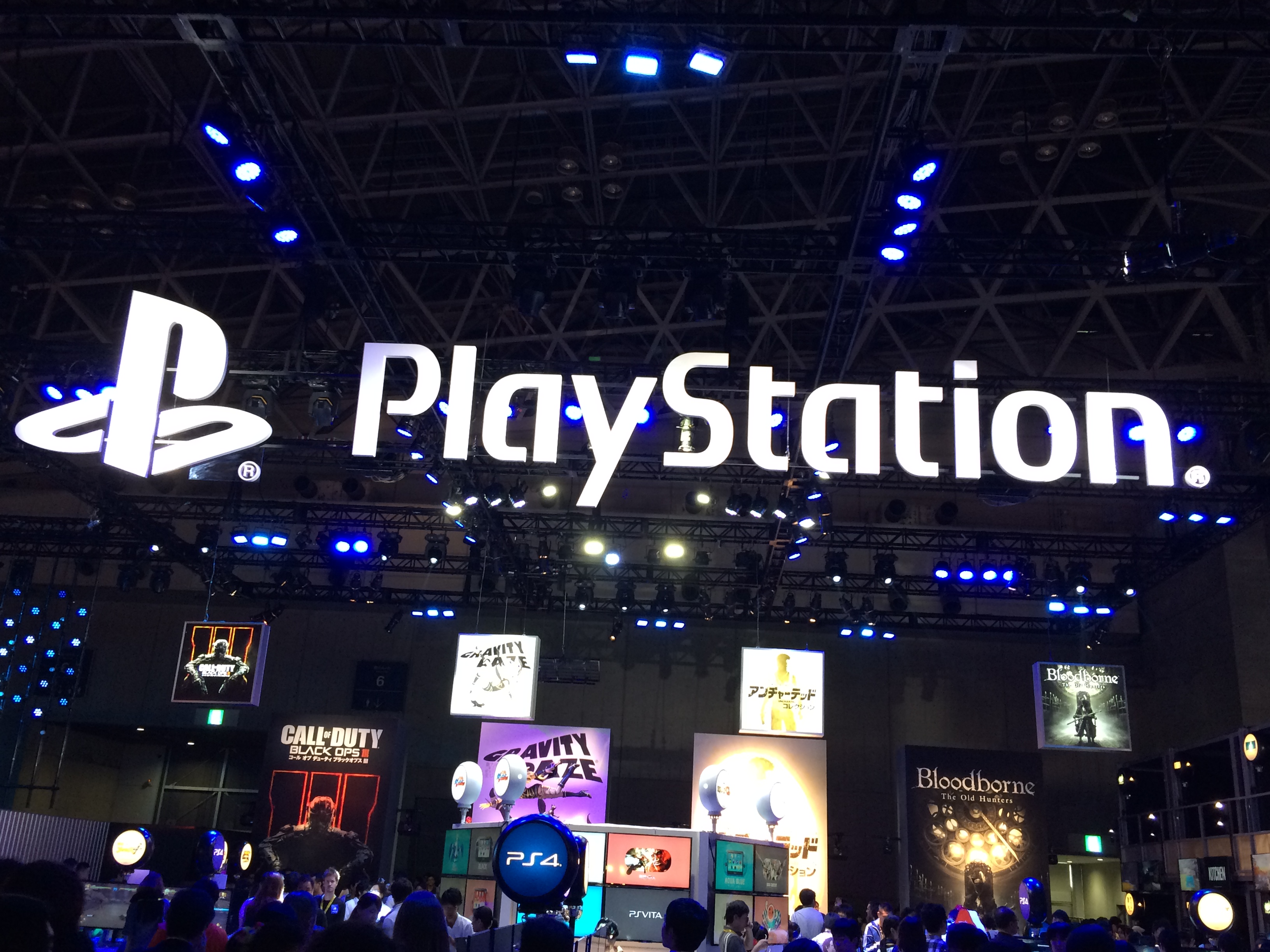
Japanese Sony announced in late January that it plans to consolidate its gaming business units, Sony Computer Entertainment and Sony Network Entertainment International, to form Sony Interactive Entertainment as of April 1. The PlayStation business sold about 20% of the group total for the October-December quarter of 2015.
The integration is aimed at bringing the company’s geographically scattered gaming resources – hardware, software and services – together under one roof, allowing for a more flexible and integrated business that can react far more quickly in an ever changing market.
While many see the logic behind the move, there is concern that Sony has decided to relocate the base of its gaming business to San Mateo, in California’s Silicon Valley.
Kenichiro Yoshida, Sony’s executive deputy president and chief financial officer, explains that the rationale is based in the company’s desire to remain at the forefront of the gaming and entertainment business, and that transformation of digital content typically emerges in the U.S.
Gaming has been one of Japan’s key industries for decades. According to a survey by The Nikkei, roughly 70% of the gaming console market worldwide was shared by Sony and Japanese video game giant Nintendo in 2014. Recent research by the Japenese Ministry of Economy, Trade and Industry says Japanese content accounted for 20% of the global gaming content market, eclipsing the country’s presence in the world’s broadcasting or music industries.
For many years, Nintendo was a pioneer in the industry and SCE succeeded in making its own way by opening up a new market with the PlayStation. The business also worked together with Toshiba and IBM on developing superchip named the Cell, and has quite literally led the digital entertainment industry since its foundation in 1993.
SCE says it will retain some functions, including hardware development, in Tokyo after April’s restructuring. Relocation to the U.S. does not mean Japan loses its gaming industry, but the relocation is highly significant.
According to “How Google Works“, a book by former Google CEO Eric Schmidt and Jonathan Rosenberg, physical location “matters more than ever” today. The book argues: “We used to think that the advent of Internet and other communication technologies would lead to more hubs springing up and reduce the importance of existing ones, but in fact the opposite is true.”
It also says each industry has its own ideal locations that could attract the “best smart creatives.” It names some industrial hubs: New York, London, Hong Kong, Frankfurt and Singapore for finance; Boston and Basel for biotech; and Singapore and Shanghai for shipping.
Few would argue that Silicon Valley is the hub for information technology, and as technology becomes an intrinsic part of virtually every process in every industry, the attraction of the area becomes ever stronger.

The relocation of such an iconic name may reflect the weakening presence in the field of a country that once dominated the world’s gaming industry.
In Tokyo earlier this week, Nintendo and GungHo Online Entertainment, the Tokyo-based online game operator known for the hit title “Puzzle and Dragons,” separately unveiled their business performance for the October-December quarter, both of which made grim reading for Japan’s gaming industry.
Japan is also often thought of as one of the world’s automobile hubs, but the auto industry too is also gravitating towards Silicon Valley. Auto giant Toyota Motor in November said it will launch an artificial intelligence research institute in Palo Alto, California.
In case you were wondering, How Google Works did not cite Japan as the world’s automobile hub. That honor went to southern Germany.
The country’s largest companies seem interested solely in mergers and consolidations these days. Japan’s top steelmaker Nippon Steel & Sumitomo Metal announced this week it plans to buy the fourth largest Nisshin Steel. But the move is hardly likely to encourage the country to build industrial hubs at home. It appears the time when Japan struggles to name an industry in which it plays a main role may come a lot sooner than we think.
Source: Nikkei Asian Review


